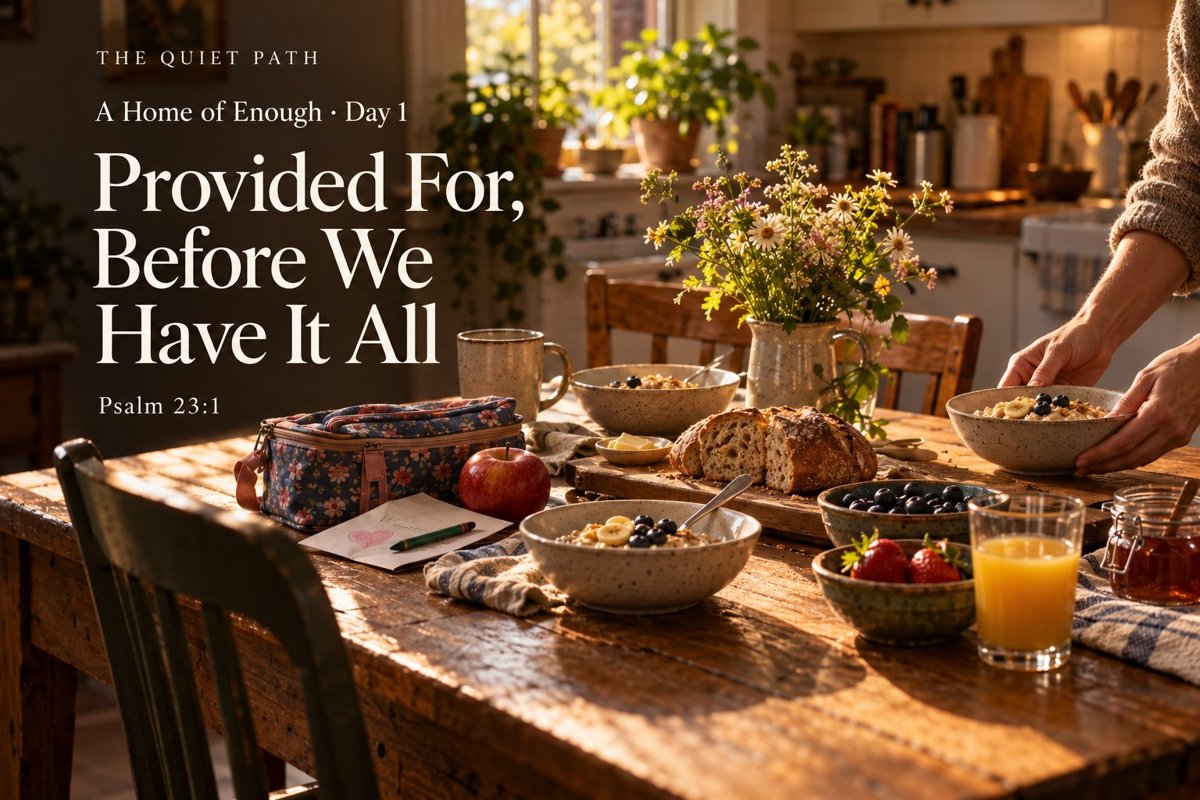
Daily · A Home of Enough · Day 1 of 5
Provided For, Before We Have It All
Five days of raising children in security, contentment, and trust.
Listen to today's episode
Why I wrote this study
A few years ago, our family went through a major upheaval. It shattered what felt secure and changed the way all of us understood our lives.
As we picked up the pieces, we had to lean on our faith to move forward. There were things we couldn’t fix quickly and questions we couldn’t answer. We needed God in the middle of the uncertainty, while we were still figuring out what came next.
During that season, it became important to me in a way it hadn’t been before that my children understand what it means to put God first.
It’s easy to have those words on a picture hanging on the wall. It’s another thing to make them the foundation of your life—to turn toward Him when you’re afraid, seek His wisdom when you don’t know what to do, and trust Him when you can’t see how everything will work out.
That choice changes how you live. It can bring you peace even in the middle of a storm.
I’m still learning this myself. I want my children to see me practicing it, especially when life is difficult.
That is where A Home of Enough began.
I want my children to feel provided for and free to enjoy their lives without measuring them against someone else’s possessions. More deeply, I want them to know where their security comes from when circumstances change.
We cannot promise our children that nothing will ever shake their world. I wish we could. But we can help them build a faith they can turn to when it does. We can show them what it looks like to pray, ask for help, make a different choice, and take the next step with God.
Over these five days, we’ll explore how that faith shapes the atmosphere of our homes: how we handle worry, talk about money, respond to comparison, and care for one another.
My hope is that our children will carry this truth with them long after they leave home:
Putting God first is a choice we live. And His presence can bring us peace while the storm is still going.
Read: Psalm 23:1–4; Matthew 6:31–33 Focus: Psalm 23:1 Key truth: My child’s security can grow through the faithful love I give today.
Devotion
“The LORD is my shepherd; I shall not want.”
— Psalm 23:1
Sometimes a child asks for a new pair of shoes, and a parent hears something much heavier: Am I giving them enough? Are they missing out because of me?
We love our children, so their disappointment can feel personal. We may begin measuring our care against another family’s purchases. Before long, an e-bike or a game console becomes a verdict on our parenting.
Psalm 23 invites us to begin somewhere else.
David begins with the Shepherd. Before he mentions green pastures, still waters, or a restored soul, he names the relationship that holds his life together: “The LORD is my shepherd.”
The psalm does not describe a life without hardship. There is a dark valley on this path. Yet even there, David is accompanied. His confidence rests in the presence and care of God.
That is the kind of security we hope our children will learn through us. Our care is limited, and we will sometimes get it wrong. Still, through ordinary faithfulness, we can help them experience what it means to be known, listened to, and cared for.
There is a thought worth carrying into this week: “It doesn’t matter your income; it matters your outcome.”
Income certainly matters when rent is due or groceries are running low. Financial hardship is real, and families need practical support. But a paycheck cannot tell the whole story of a home. The fruit we hope to nurture includes trust, gratitude, generosity, and the ability to enjoy life without constantly keeping score.
In Matthew 6, Jesus reminds His listeners that their Father knows their needs. We can bring our own needs to Him as we work, budget, seek help, and care for our families.
Today, giving your child a sense of provision might mean preparing a meal, following through on a promise, or putting down your phone long enough to hear what happened at school. It might mean calmly explaining that something will have to wait.
You do not have to purchase your way into being a loving parent. Begin with the care you can faithfully give today, and place what is beyond you into the Shepherd’s hands.
Reflection
When my child wants something I cannot provide, what story do I begin telling myself about my worth as a parent?
Practice the path
Spend ten unhurried minutes with your child doing something simple they enjoy. Let your attention communicate, “You matter to me.”
Prayer
Lord, You are our Shepherd. You see our needs and the pressure I feel to give my children enough. Guide my decisions and provide help where our resources fall short. Teach me to care with patience and consistency. Let my children experience steady love through me, and help our family learn to trust Your care. Amen.
Listen to this episode:
Play it on the podcast page · Apple Podcasts · Spotify
More at quietpathapp.com/podcast
Walk with us
A quiet moment in your inbox.
Receive the Daily Devotion each weekday morning.
Prefer to listen? Explore the podcast →Subscriptions are managed by Substack. You can unsubscribe at any time.